








the race for ai: consequences for the balance of power in the 21st century
introduction
the twenty-first century is witnessing a profound transformation, one driven not by tanks and doctrines of old, but by algorithms and data. artificial intelligence (ai), once the stuff of science fiction, is rapidly evolving into a foundational technology with the potential to reshape every facet of human endeavour. for strategists and geopoliticians, this technological revolution presents a landscape as volatile and consequential as any arms race of the past. the ‘course à l’ia’, as it is increasingly termed, is not merely an economic competition; it is a fundamental race for advantage that will redefine the global balance of power. this article will examine the strategic context of this race, identify the key actors and their interests, explore potential scenarios and risks, and finally, propose policy options for nations seeking to navigate this complex terrain.
strategic context
the current ai race is an acceleration and amplification of historical patterns of technological competition. throughout history, states and societies that harnessed new technologies – from gunpowder to steam power to nuclear fission – gained significant strategic advantages. the industrial revolution, for instance, enabled the great powers of the 19th century to project influence and build colonial empires. similarly, the nuclear age introduced a new paradigm of deterrence, albeit one fraught with existential risks. ai represents a similar inflection point, but with a potentially broader and more immediate impact.
the current trajectory is marked by several critical characteristics that distinguish it from previous technological transitions. firstly, the pace of innovation is exceptionally rapid. breakthroughs in deep learning and generative ai, emergent in the past decade, have democratised certain capabilities while simultaneously concentrating advanced research and development within a select few. this speed means that advantages gained can be ephemeral, demanding constant vigilance and adaptation.
secondly, the infrastructural demands of advanced ai are immense. training and deploying complex ai models require vast computational power, abundant energy, and sophisticated data management. this has led to a renewed focus on foundational industries and resources, reminiscent of the competition for coal and iron in the past. the sheer scale of investment required, estimated at over 650 billion dollars by major us tech firms for ai in 2026 alone, underscores the creation of new ‘digital empires’ built on computational capacity.
thirdly, ai is intrinsically linked to the concept of global interconnectedness and its vulnerabilities. while ai promises to boost productivity and solve complex problems, it also introduces novel forms of risk, from widespread job displacement to the potential for autonomous weapons systems. the concentration of ai development in a few hands, be they corporate or national, raises concerns about equitable access, the perpetuation of biases, and the potential for authoritarian control.

finally, the current ai race is unfolding within a context of rising global tensions, renewed great power competition, and a questioning of established international norms. protectionist sentiments and nationalistic impulses are increasingly intertwined with technological development, creating a complex web of strategic challenges.
the strategic implication of ai is thus multi-faceted: it is an engine of economic growth, a catalyst for military modernization, and a tool for shaping societal narratives and political will. failure to grasp its strategic dimensions risks relegation to technological dependency and geopolitical marginalization.
key actors and interests
the race for ai is dominated by a nexus of actors, each with distinct, though often overlapping, interests:
les géants de la tech américains
the United States remains the undisputed leader in ai innovation and deployment, primarily driven by its dominant technology companies. giants like alphabet (google), amazon, meta, and microsoft are not only investing astronomical sums in ai but are also actively shaping its trajectory. their interests are multifaceted:
- market dominance and profit: their primary objective is to maintain and expand their global market share by integrating ai across their product and service offerings. this includes everything from search engines and cloud computing to social media and e-commerce. the pursuit of ‘speed and infrastructure’ as articulated by some experts signifies a race for market dominance based on who can deploy the most effective ai systems fastest.
- data acquisition and control: ai models are data-hungry. these companies are at the forefront of accumulating and controlling vast datasets, essential for training and refining their ai systems.
- national security contributions: while primarily driven by commercial interests, these firms are increasingly collaborating with the us government on defence-related ai projects, contributing to national security objectives. this is a critical element of the ‘dual-use’ nature of ai technology.
- talent acquisition and retention: the demand for top ai talent is immense, leading to intense competition for researchers and engineers. strategies focused on early investment and creating attractive research environments are key.
la chine et son ambition d’IA
china has made ai a strategic national priority, viewing it as crucial for its economic rejuvenation and geopolitical aspirations. its approach differs in its state-led direction and emphasis on specific applications:
- economic transformation and productivity gains: the chinese government aims to leverage ai to upgrade its industrial base, boost productivity across sectors, and transition from a manufacturing-centric economy to one driven by innovation. this aligns with the understanding of ai as a general-purpose technology that can generate widespread productivity gains.
- social governance and surveillance: ai plays a significant role in china’s efforts to enhance social governance, manage its population, and maintain political stability. the development of sophisticated surveillance systems powered by ai is a clear illustration of this interest.
- military modernization: china views ai as a critical component of its military modernization programme, seeking to develop autonomous systems, enhance command and control capabilities, and achieve strategic parity with the us. this pursuit is often framed within the doctrine of ‘intelligentised warfare’.
- global leadership in specific domains: china aims to be a global leader in ai, particularly in areas like facial recognition, natural language processing, and autonomous vehicles. this ambition is fuelled by substantial state investment and a focus on data generation through its large population.
l’union européenne et ses défis
the european union, while possessing significant scientific talent and a strong ethical framework, faces considerable challenges in the ai race. its interests are primarily focused on:
- regulation and ethical development: the eu is committed to developing ai that is human-centric, trustworthy, and respects fundamental rights. the general data protection regulation (gdpr) and the proposed ai act reflect this prioritization.
- economic competitiveness and digital sovereignty: europe seeks to foster its own ai industry and reduce its dependence on us and chinese technology. initiatives like PoliCloud, aiming to acquire 400,000 gpus by 2030, highlight this ambition to build sovereign infrastructure.
- maintaining its values in a digital future: the eu aims to ensure that the ai revolution aligns with its core democratic values and social market economy principles, avoiding the societal disruptions and power concentrations seen elsewhere. the challenge lies in balancing innovation with robust regulation.
autres acteurs émergents et acteurs non étatiques
several other actors are increasingly relevant:
- autres états (russie, inde, etc.): while not operating at the same scale as the US, China, or EU, countries like Russia and India are investing in ai for defence and economic purposes. India, with its vast pool of tech talent and a growing digital population, is a significant emerging player.
- les entreprises individuelles (hors hyperscalers): beyond the biggest tech firms, numerous startups and established companies across various sectors are developing and deploying ai solutions, contributing to the overall innovation landscape.
- les communautés de recherche et les universitaires: academic institutions and independent researchers are crucial for fundamental research and for fostering critical thinking about ai’s societal impact. their role in pushing the boundaries of knowledge is undeniable, even if they lack the deployment scale of corporations.
the interests of these actors often intersect and conflict, creating a dynamic and unpredictable geopolitical environment. the flow of talent, capital, and data between these entities further complicates the strategic calculus.
scenarios and risks
the trajectory of the ai race is not predetermined. several scenarios, each with distinct consequences for the global balance of power, are plausible. these scenarios are not mutually exclusive and can evolve over time.
scenario 1: la domination americano-chinoise
in this scenario, the world becomes increasingly bipolar, with the us and china dominating ai development and deployment.
- mechanisms: the massive investments by us tech giants, coupled with significant government support for research and development, allow the us to maintain a lead in fundamental research and cutting-edge applications. china, with its massive datasets, state-directed investment, and focus on large-scale implementation, excels in specific application areas and social control.
- impact on the balance of power: this would solidify a new form of cold war, not ideologically driven as the first, but technologically and economically. countries would align with either the american or chinese ai ecosystem, creating digital spheres of influence. economic competition would intensify, with ‘techno-nationalism’ leading to trade blocs and restrictions on technological exchange. the capacity to control critical data flows and supply chains would become paramount.
- risks:
- increased global instability: the rivalry could manifest in cyber warfare, economic coercion, and proxy conflicts in developing nations seeking technological alignment.
- fragmentation of the internet and global standards: differing ai architectures and ethical frameworks could lead to a fractured digital landscape, hindering global cooperation.
- concentration of power: the immense power of ai developers and deployers, be they state or corporate, could lead to unprecedented levels of surveillance and control.
scenario 2: l’émergence d’un bloc européen souverain
in this scenario, the eu successfully navigates its challenges to establish a strong, independent ai ecosystem.
- mechanisms: europe leverages its regulatory strength and ethical framework to create a trusted ai environment. substantial public and private investment, possibly through pan-european initiatives like PoliCloud and a focus on space-based computing, allows it to build significant computational infrastructure. a focus on niche but high-value applications, coupled with strong data protection laws, attracts talent and investment.
- impact on the balance of power: this would create a multipolar world, with europe offering a third way between us and chinese models. it would empower europe to act as a more independent geopolitical actor, less reliant on either superpower. it could also set global standards for ethical ai, influencing development worldwide. this scenario could also lead to a more distributed power structure, potentially mitigating risks of extreme concentration.
- risks:
- difficulty in catching up: the sheer scale of investment by us and chinese tech giants might prove insurmountable, making it challenging for europe to achieve parity in all areas.
- innovation slowdown: an overemphasis on regulation could stifle rapid innovation, as witnessed in other tech sectors.
- internal divisions: agreeing on common strategies and funding mechanisms across 27 member states can be a significant hurdle.
scenario 3: la prolifération non contrôlée et l’instabilité systémique
this scenario envisions a rapid, unmanaged spread of ai capabilities, leading to widespread disruption and instability.
- mechanisms: open-source ai models become increasingly powerful and accessible, allowing less scrupulous actors, including non-state groups and rogue states, to develop advanced capabilities with limited oversight. the speed of deployment outpaces regulatory capacity globally. the potential for ai to exacerbate existing societal inequalities and create new forms of economic precarity without mitigating measures is realized.
- impact on the balance of power: this would erode the established order and create a highly unpredictable global environment. the distinction between state and non-state actors could blur as powerful ai tools become available to a wider range of entities. economic disruptions could lead to social unrest and political extremism, weakening existing governance structures. the potential for ai to be used for malicious purposes, such as disinformation campaigns or autonomous attacks, would increase exponentially. this is the scenario where warnings of ai as an existential threat become most potent.
- risks:
- autonomous weapons proliferation: the uncontrolled spread of ai for military purposes could lead to flash wars and escalatory spirals.
- widespread disinformation and social manipulation: ai-powered propaganda and fake news could destabilize democracies and polarize societies.
- economic collapse and mass unemployment: rapid automation without adequate social safety nets could lead to widespread job losses and economic hardship, fuelling social unrest.
- existential threats: as articulated by some experts like Dario Amodei, the uncontrolled development of superintelligent ai could pose an existential risk to humanity itself, especially if its goals are misaligned with human values. the shift towards opportunities in 2025-2026 suggests this risk could materialize sooner than anticipated.
les risques spécifiques à la course à l’IA
beyond these overarching scenarios, several specific risks permeate the ai race:
la concentration du pouvoir et les biais
- mécanismes: the massive investment required for cutting-edge ai development inherently leads to a concentration of power within a few large corporations and technologically advanced states. this concentration can embed existing societal biases into ai systems, perpetuating discrimination and inequality. the lack of transparency in proprietary ai models exacerbates this problem.
- conséquences: this can lead to unfair outcomes in areas like hiring, loan applications, and criminal justice. politically, it can empower authoritarian regimes and undermine democratic processes through targeted propaganda and surveillance.
la militarisation de l’IA
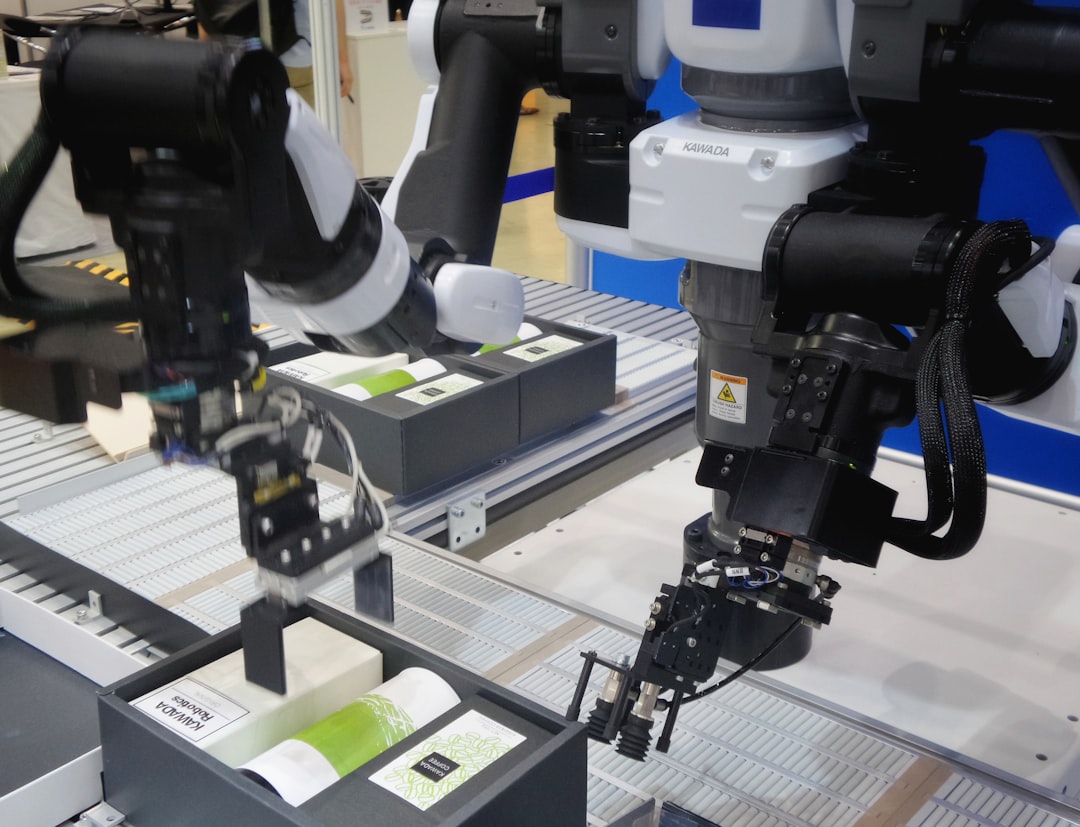
- mécanismes: the application of ai in military contexts, from autonomous weapons systems to advanced intelligence analysis, promises greater efficiency and reduced human risk for operators. however, it also lowers the threshold for conflict and creates ethical dilemmas concerning accountability and the decision to take human life. the development of ‘intelligentised warfare’ doctrines signifies a shift in military thinking.
- conséquences: an ai arms race could lead to a new era of instability, where conflicts escalate rapidly and unpredictably. the potential for autonomous systems to make lethal decisions without human intervention raises profound ethical and legal questions.
la disruption économique et l’emploi
- mécanismes: ai’s capacity for automation extends beyond repetitive tasks to cognitive functions, posing a significant threat to white-collar jobs. estimates suggest that up to 50% of entry-level management positions could be at risk, as articulated by some experts. this rapid displacement, if not managed, can lead to widespread unemployment and social unrest.
- conséquences: increased economic inequality, social instability, and a potential decline in consumer demand. the necessity for governments to implement robust reskilling programs and social safety nets becomes paramount.
la ruée sur l’énergie et les ressources
- mécanismes: training and running complex ai models, especially large language models, are incredibly energy-intensive. this is fuelling a significant demand for electricity, creating pressure on energy grids and necessitating the construction of new data centres. ideas like space-based servers are emerging partly to address energy and cooling demands.
- conséquences: environmental concerns and geopolitical competition for energy resources. states and corporations will vie for access to cheap and abundant energy, potentially leading to new resource conflicts or intensified focus on renewable energy R&D.
policy options
navigating the complexities of the ai race requires a multi-pronged and proactive policy approach, grounded in strategic foresight and a clear understanding of national interests.
option 1: fostering european technological sovereignty through strategic investment and regulation
this option centres on strengthening europe’s indigenous ai capabilities while establishing a robust regulatory framework.
- politiques:
- investissements massifs dans l’infrastructure: significantly increase public and private funding for computational power, including initiatives like PoliCloud to acquire hundreds of thousands of gpus by 2030. this requires de-risking private investment and potentially establishing european sovereign cloud infrastructure.
- soutien à la recherche fondamentale et appliquée: direct funding towards european universities and research institutions to foster fundamental breakthroughs and ensure a steady pipeline of talent. this includes support for interdisciplinary research on ai ethics and societal impact.
- cadre réglementaire clair et adaptatif: maintain and refine the ai act to provide legal certainty for businesses and citizens, while remaining flexible enough to accommodate rapid technological advancements. focus on ‘responsible ai’ principles.
- développement de champions européens: support the growth of european ai companies and startups through venture capital, incubators, and procurement policies. the eu should aim to foster companies capable of competing with US hyperscalers.
- coopération internationale ciblée: engage in partnerships with like-minded countries to share research, promote interoperability, and establish global standards for ethical ai. avoid excessive dependence on any single external power.
- mécanismes causaux: increased investment directly enhances computational capacity, a key bottleneck. a clear regulatory framework builds trust and encourages adoption, making european solutions more attractive. supporting domestic champions fosters a self-sustaining ecosystem. international cooperation ensures europe is not sidelined in global standard-setting.
option 2: embracing pragmatic international cooperation with strategic safeguards
this approach acknowledges the global nature of ai and seeks to leverage it for common good while mitigating risks through targeted measures.
- politiques:
- dialogue multilatéral sur la gouvernance de l’IA: actively participate in international forums to discuss ai governance, arms control, and ethical guidelines. focus on establishing common norms and best practices.
- partenariats de recherche ciblés: collaborate with trusted international partners on research projects with clear societal benefits, such as climate change mitigation or disease eradication, ensuring intellectual property is protected.
- promotion de l’interopérabilité et des normes ouvertes: advocate for open standards and interoperable ai systems to prevent technological fragmentation and promote fair competition.
- vigilance sur la double utilisation et les technologies sensibles: implement robust export controls and due diligence mechanisms for dual-use ai technologies to prevent their proliferation to malicious actors.
- soutien aux pays en développement: assist developing nations in building their ai capacity responsibly, preventing them from becoming solely dependent on one technological bloc.
- mécanismes causaux: multilateral dialogue builds consensus and reduces the likelihood of an uncontrolled proliferation of dangerous ai. targeted partnerships accelerate innovation for beneficial purposes. promoting open standards fosters a competitive and accessible ai landscape. export controls act as a direct deterrent against the weaponization of ai by adversarial states or groups.
option 3: building resilience and adaptability in the face of disruptive change
this strategy focuses on preparing national societies and economies for the inevitable disruptions brought by ai.
- politiques:
- investissements dans l’éducation et la reconversion professionnelle: reform educational systems to emphasize critical thinking, digital literacy, and skills relevant to an ai-driven economy. implement comprehensive lifelong learning and reskilling programs to address potential job displacement.
- renforcement des filets de sécurité sociale: review and adapt social welfare systems to provide adequate support for citizens affected by automation and economic disruption. this could include exploring concepts like universal basic income.
- promotion de la recherche sur les impacts socio-économiques de l’IA: fund research into the long-term effects of ai on employment, inequality, and social cohesion to inform policy development.
- développement de capacités de cybersécurité et de résilience numérique: strengthen national cybersecurity infrastructure and develop robust defenses against ai-powered cyberattacks and disinformation campaigns.
- focalisation sur l’IA éthique et centrée sur l’humain: integrate ethical considerations into all stages of ai development and deployment, ensuring that ai systems are designed to augment, not replace, human capabilities where appropriate.
- mécanismes causaux: education and reskilling build a workforce capable of adapting to new roles. strong social safety nets mitigate the societal fallout of automation. research on impacts provides evidence for informed policy. cybersecurity builds resilience against threats. ethical focus ensures ai serves human interests.
conclusion
the race for artificial intelligence is not a sprint; it is a marathon whose finish line is still indistinct, but whose consequences for the global balance of power are already profound. the colossal investments by tech giants, the accelerating pace of innovation, and the infrastructural demands are creating new centres of gravity in the international system. the us and china are undoubtedly the primary contenders, each with distinct strategies and aspirations, but the role of a sovereign, ethically-guided europe, and the potential for uncontrolled proliferation, cannot be understated.
the risks are not merely economic or military; they touch upon the very fabric of society, from employment and inequality to the potential for unprecedented surveillance and existential threats. failure to grasp the strategic implications of ai will render nations vulnerable to technological dependency and geopolitical marginalization.
navigating this complex landscape requires strategic foresight, proactive policy-making, and a nuanced understanding of the interplay between technology, economics, and geopolitics. whether through fostering sovereign capabilities, embracing pragmatic cooperation, or building societal resilience, nations must adapt. the ai revolution is here, and its impact on the 21st-century balance of power will be as transformative as any before it. the choices made today, the investments undertaken, and the regulatory frameworks established will determine who shapes the future and who is merely shaped by it.